On-Grid vs Off-Grid Solar System
Solar energy is becoming one of the most popular solutions for reducing electricity bills and achieving energy independence. When installing a solar power system, homeowners usually choose between on-grid and off-grid solar systems.
Both systems generate electricity using solar panels, but they differ in how they store and use power. Understanding the differences between these two systems helps you select the best solution for your home or business.
At Jayaam’s Gruham, we provide customized solar solutions designed to match different energy needs, locations, and budgets.
What is an On-Grid Solar System?
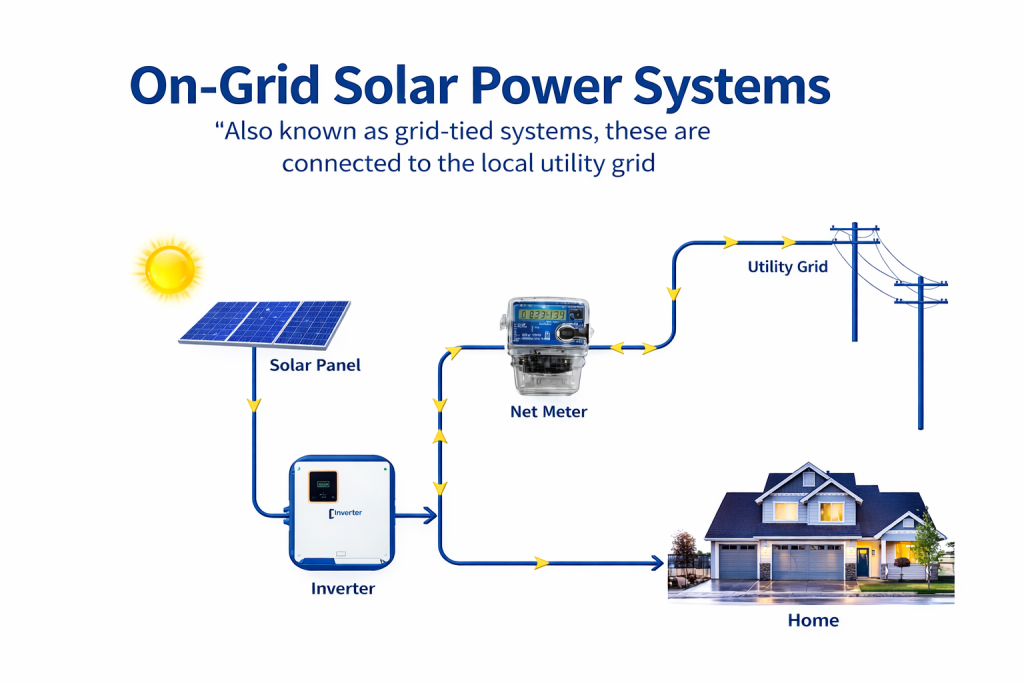
An on-grid solar system, also known as a grid-tied solar system, is connected to the local electricity grid. The solar panels generate electricity during the day, which powers your home appliances.
If the solar system produces more electricity than your home consumes, the excess power is sent back to the grid through net metering.
During nighttime or cloudy weather, when solar production is low, electricity is automatically supplied from the grid.
Key Features
- Connected to the utility electricity grid
- No battery storage required
- Lower installation cost
- Net metering benefits available
- Best for urban and residential homes
What is an Off-Grid Solar System?
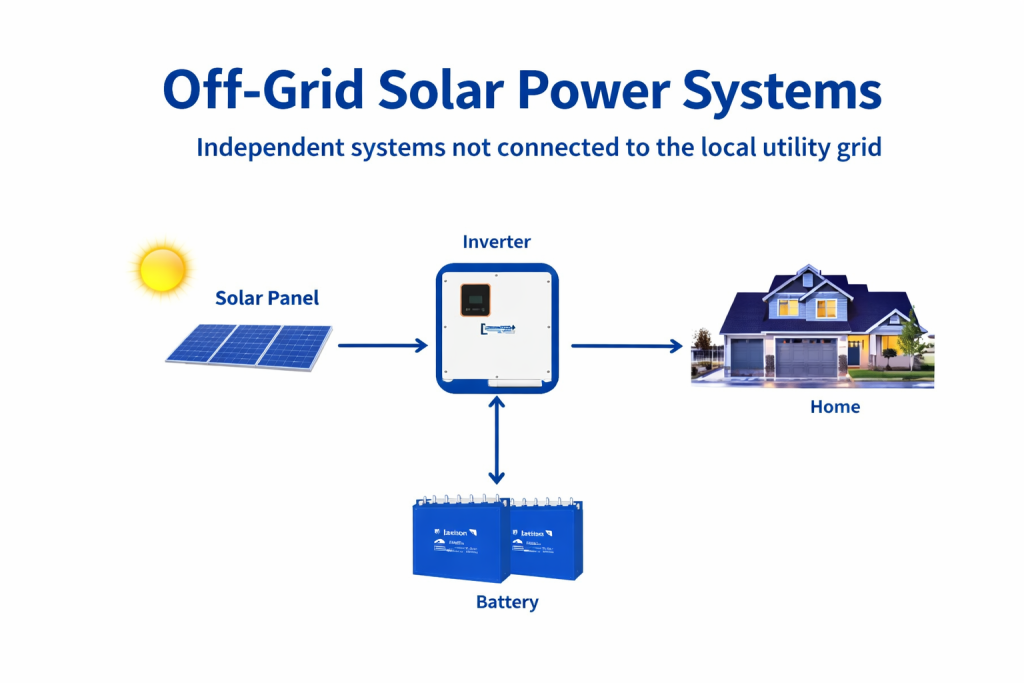
An off-grid solar system operates completely independent of the electricity grid. This system is designed for locations where grid electricity is unavailable or unreliable.
Off-grid systems store the energy generated by solar panels in batteries, which can then be used during the night or during cloudy days.
This type of solar setup provides complete energy independence, making it ideal for remote areas, farms, cabins, and mobile homes.
Key Features
- Not connected to the electricity grid
- Requires battery storage
- Works in remote areas without electricity
- Provides full energy independence
- Ideal for rural areas and mobile homes
On-Grid vs Off-Grid Solar
System Comparison
| Feature | On-Grid Solar System | Off-Grid Solar System |
| Grid Connection | Connected to electricity grid | No grid connection |
| Battery Storage | Not required | Not required |
| Installation Cost | Lower cost | Higher cost |
| Electricity Backup | Uses grid power | Uses battery backup |
| Energy Independence | Partial | Complete |
| Best Suitable For | Cities, homes with grid power | Remote areas, farms, mobile homes |
Advantages of On-Grid Solar Systems
Lower Installation Cost
Since on-grid systems do not require batteries, they are more affordable to install.
Net Metering Benefits
Excess electricity generated by the solar panels can be exported to the grid, helping reduce electricity bills.
High Efficiency
On-grid systems use electricity directly from solar panels during the day, maximizing energy efficiency.
Government Subsidies
Homeowners may be eligible for government solar subsidies under programs like PM Surya Ghar Muft Bijli Yojana.
Advantages of Off-Grid Solar Systems
Energy Independence
Off-grid systems allow you to generate and store your own electricity without relying on utility companies.
Ideal for Remote Locations
They are perfect for areas where grid electricity is not available.
Reliable Power Supply
Battery storage ensures electricity availability even during power outages.
Suitable for Mobile Homes
Off-grid solar systems are ideal for solar-powered homes and portable living solutions.
Hybrid Solar Systems
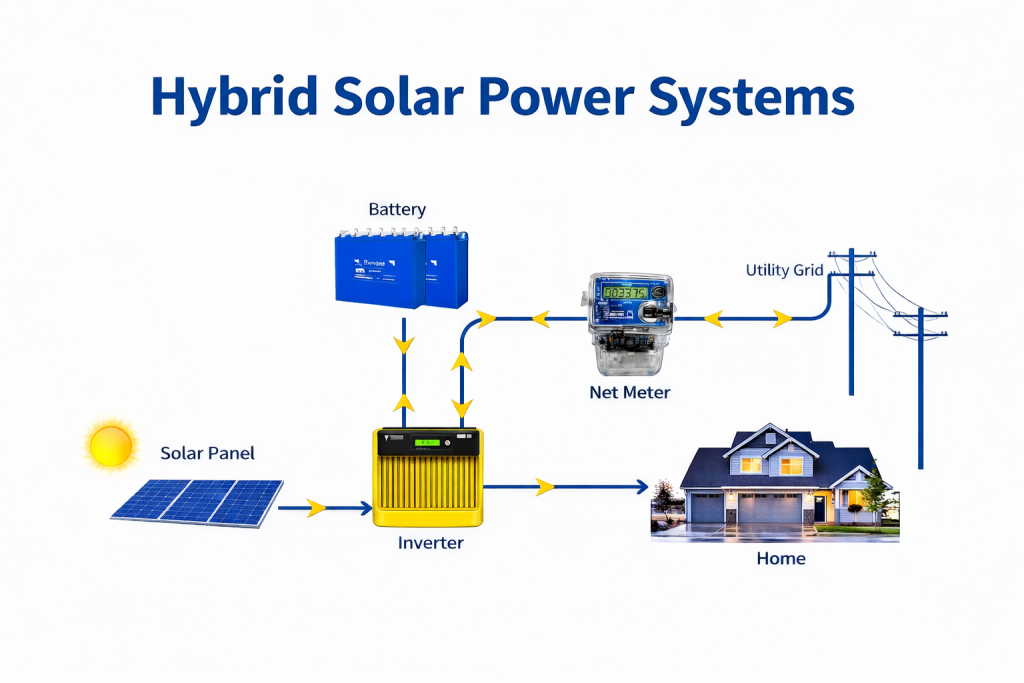
A Hybrid Solar System combines the advantages of both on-grid and off-grid solar systems. It connects solar panels to the utility grid while also storing excess energy in batteries for later use. Because it integrates battery storage, hybrid systems are often called “Solar + Battery” or “Solar-Plus-Storage” system
With a hybrid setup, the electricity generated from solar panels can power your home during the day. Any extra energy can either be stored in batteries or exported to the grid. When solar production is low — such as at night or during cloudy weather — the system automatically uses the stored battery power or grid electricity.
Hybrid solar systems are especially useful in locations where power outages are common or where net metering benefits are limited. During a grid failure, the battery backup ensures that essential appliances like lights, fans, routers, and refrigerators continue running.
Another advantage of hybrid systems is better energy independence. By storing unused solar power, homeowners can reduce their dependence on the utility grid and maximize the use of clean, renewable energy. This helps lower electricity bills while also supporting a more sustainable lifestyle.
Advantages of Hybrid Solar Systems
- Provides backup power during grid outages
- Stores excess solar energy in batteries
- Reduces dependence on the utility grid
Limitations of Hybrid Solar Systems
- Higher upfront cost due to battery storage
- Battery systems require maintenance and eventual replacement
- Installation and system design can be more complex
Which Solar System is Best for You?
The choice between on-grid and off-grid solar systems depends on several factors such as location, electricity availability, and energy requirements.
Choose On-Grid Solar If:
- You have a stable electricity connection
- You want to reduce electricity bills
- You want a lower installation cost
- Your home is located in a city or town
Choose Off-Grid Solar If:
- Your location has no grid electricity
- You want complete energy independence
- You live in remote areas or farms
- You need solar for mobile homes or cabins
Choose Hybrid Solar If:
- You want backup power during electricity outages
- You want to store excess solar energy in batteries
- You want to reduce dependence on the utility grid
- Your area experiences frequent power cuts
Why Choose Jayaam’s Gruham Solar Solutions?
At Jayaam’s Gruham, we specialize in delivering innovative solar solutions designed for modern living.
Our services include:
- Solar systems for homes and businesses
- Solar-powered mobile homes
- Custom solar installation design
- Strong solar mounting structures
- Professional installation and support
We aim to help customers transition to clean, reliable, and cost-effective solar energy.